
Alleghany Parole and Probation
North Carolina uses several forms of community supervision. Probation is a sentence ordered by a court and served in the community. It may begin without any prison release. Post-release supervision, often shortened to PRS, is the community stage that follows a covered modern felony prison sentence. Parole is a conditional prison release used mainly for older, parole-eligible sentences and limited statutory categories. The North Carolina Department of Adult Correction, or NC DAC, administers community supervision, while the Post-Release Supervision and Parole Commission sets PRS conditions and handles the parole decisions within its authority.
| Status | What it means | Best verification |
|---|---|---|
| Probation | A court sentence served under community rules. It need not follow prison. | Court judgment and NC DAC supervision record |
| Post-release supervision | A statutory period after release from a covered state prison term. | NC DAC movement and supervision fields |
| Parole | Conditional release for an eligible legacy or special-category sentence. | Commission decision plus NC DAC actual movement |
| Discharge | The displayed supervision case has ended. | NC DAC inactive status and termination history |
Check Alleghany Supervision Records
The primary person-level source is the NC DAC Offender Public Information search. Its status filters matter. “Active Probationer-Parolee” means the person is presently shown in community supervision. “Inactive” means the person was formerly an inmate, probationer, or both but is no longer active in those displayed categories. It does not declare that every legal duty has ended.
- Search by DAC offender number when available. NC DAC identifies that as the fastest route, and leading zeroes are not required.
- Otherwise enter the last and first name, then add birth details or another field only as needed to separate matches. Multiple criteria work together.
- Select Active Probationer-Parolee for current supervision, Inactive for a completed DAC record, or All when the stage is unclear.
- Open the matching detail and compare identity, county of conviction, sentence, supervision status, office or location, and movement history.
- For a prison release, look for an actual release or termination movement and its date. A projected date is an estimate, not proof of completed release.
- Confirm the assigned reporting office from release papers or the current NC DAC directory before travel.
OPI covers state custody and state community supervision. It expressly excludes ordinary county-jail records. Someone booked and released only by the Alleghany County Detention Center may never appear there. Conversely, Alleghany as the county of conviction does not prove that a state prisoner physically left custody in Sparta.
Alleghany Supervision District Office
The current NC DAC Community Supervision directory places Alleghany County in Judicial District 23 with Ashe, Wilkes, and Yadkin counties. That four-county arrangement is important because the listed district office is in West Jefferson, not at the Sparta jail.
Community Supervision District 23
Address: 1203 South Jefferson Avenue, PO Box 1909
West Jefferson, NC 28694
Phone: 336-246-6840
Fax: 336-246-7741
The statewide Community Supervision office is at 2020 Yonkers Road, Mail Service Center 4250, Raleigh, NC 27699-4250, with phone 919-716-3100. It is a directory and escalation contact, not a substitute for the assigned field office. Reporting instructions in the judgment, release papers, and officer communication control. The research does not support guessing an officer, check-in time, or reporting method.
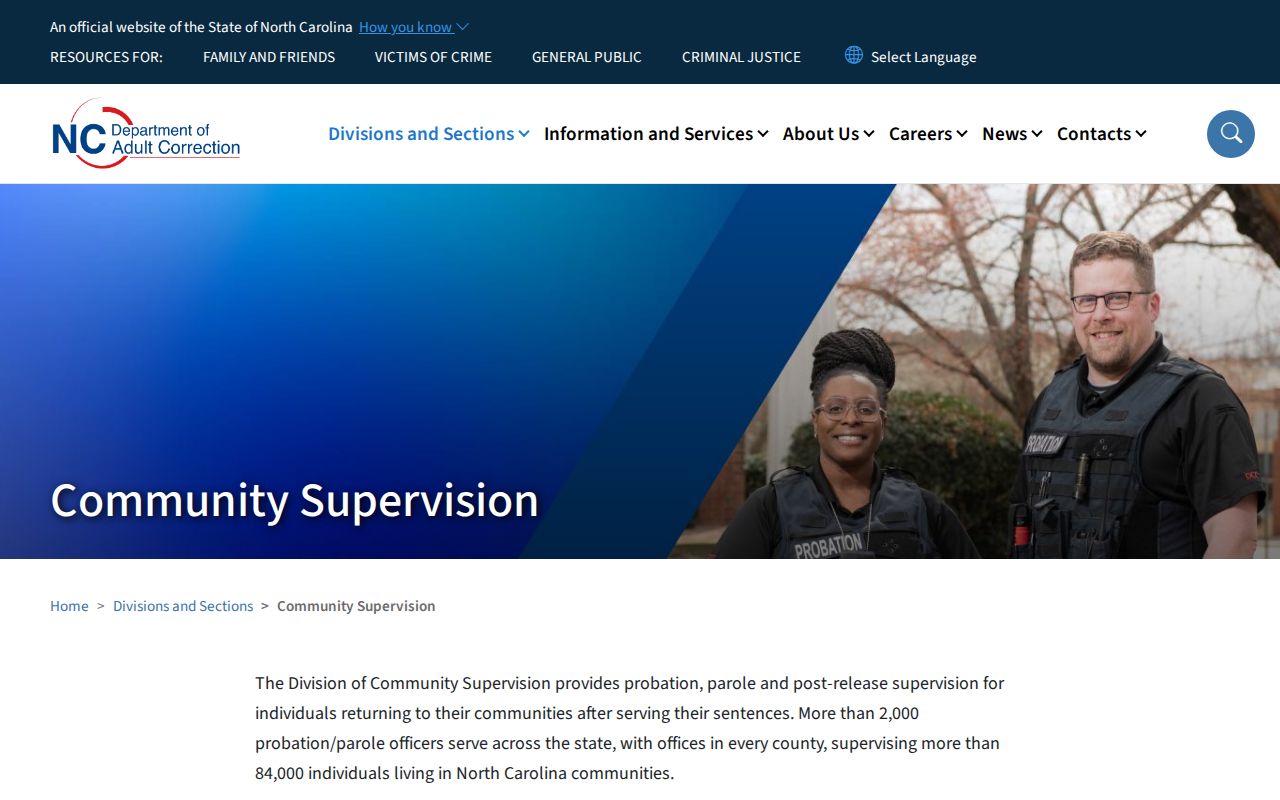
The official NC DAC Community Supervision page provides a useful view of the agency’s role:
Where Alleghany Supervision Reports
The official Alleghany reentry directory points readers toward Community Corrections in neighboring Jefferson rather than the Alleghany County Detention Center. That is a useful rural service-area clue, but the directory itself dates to March 2021 and lists an older Jefferson contact. The current District 23 directory should take priority. A released person should verify the assigned location before making the trip.
This distinction prevents a common mistake. The jail processes local custody. Community Supervision manages probation, PRS, and parole reporting. Leaving the jail does not make the jail a reporting office, and a jail employee cannot replace instructions from the assigned officer. When old and current directories differ, use the older record only to understand the regional arrangement, then confirm the live assignment through DAC.
Alleghany Absconder Record Limits
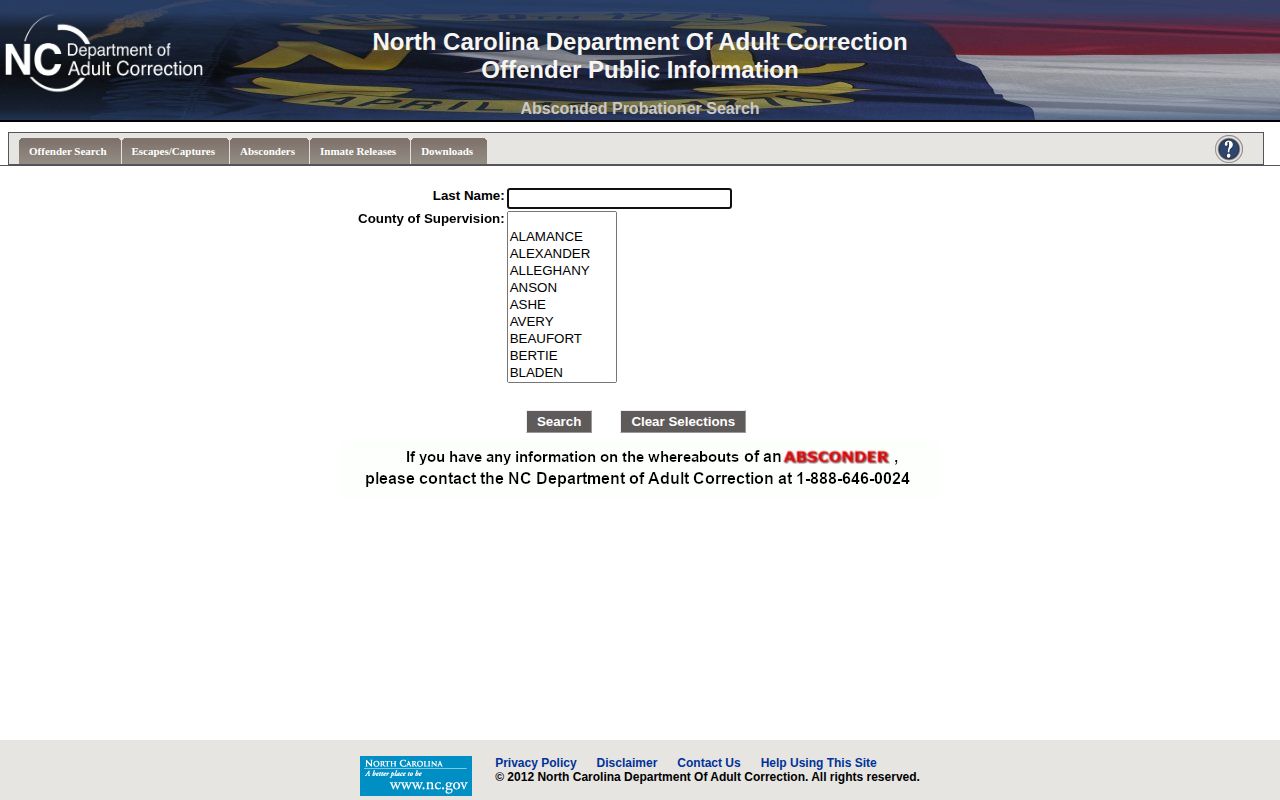
NC DAC defines an absconder as a supervised person who failed to maintain required contact and actively avoided supervision by making their whereabouts unknown. The statewide absconder search can be queried by last name and county of supervision. A match is an agency allegation about supervision status. It is not a new conviction, proof of present Alleghany jail custody, or proof that the person is presently at liberty.
DAC warns that some listed people may be incarcerated in other states and that deceased names can take days or weeks to be removed. For that reason, record the name, DAC identifier, county, and displayed status, then confirm current information with DAC. The agency’s absconder guidance lists a tip line at 1-888-646-0024. Emergency observations belong with emergency services, not an attempt to confront a listed person.
The official NC DAC absconder lookup makes the limited scope easier to understand:
Alleghany Post-Release Supervision
Article 84A of the North Carolina statutes governs post-release supervision. Under G.S. 15A-1368.2, the transition from prison to PRS generally depends on the maximum imposed term, the statutory supervision period, earned time, offense class, and offense date. The rules contain categories and exceptions. A sentence quoted from a news item is not enough to calculate the day of release.
For an Alleghany-connected state case, pair the statute with the NC DAC record. A movement marked as a release or transition to supervision is stronger than a projected release date standing alone. The Commission establishes PRS conditions and acts on violations. It does not turn every modern release into a discretionary parole decision. Modern Structured Sentencing generally replaced ordinary parole with PRS for covered felony offenses.
NC SAVAN and VINELink may send custody or release alerts from participating jail and state records. They do not issue parole-review notices. A local jail identifier and a DAC offender number can also differ after transfer, so a user may need to register the correct person in both stages. An alert is a lead. The releasing agency’s record remains the durable confirmation.
Alleghany Supervision Record Limits
The public OPI detail can combine inmate status, probation, parole, or PRS status, sentence information, location history, and last movement. Each field has a limited role. “Active Probationer-Parolee” supports current DAC community supervision, but it does not identify every term of supervision in plain language or show that another authority has no current case. “Inactive” describes the displayed DAC record, not a broad finding about the person’s legal situation.
Identity checks are essential in a small-county search. Compare the offender number, birth information, county of conviction, admission history, and sentence before reporting a status. A supervision office field can route a call, while release papers remain the direct source for where and how the person must report. When OPI and an old reentry directory point to different locations, the current DAC directory and assigned officer instructions should control. For the date custody ended, use the actual movement entry rather than the supervision label.
Confirm Alleghany Supervision Discharge
Supervision ends through the legal process that governs the case, such as completion, court action, Commission action, or another recorded termination. OPI may then show the person as inactive and display a termination or last-movement entry. “Inactive” is most useful when paired with the correct identity and an actual event date. Alone, it does not explain every case or rule out another authority’s custody.
A complete check uses three layers. Read the court judgment for the sentence, consult OPI for the state supervision record, and contact the assigned office when the displayed data is unclear. If the question is when physical custody at the county jail ended, request the jail release record instead. The Alleghany County Detention Center and its records channel answer a different question from DAC supervision.
North Carolina public-records law provides a route to inspect or request qualifying government records, but access can involve redaction or a lawful exemption. Ask for a specific record, time span, and person rather than a broad file. That helps the custodian identify the responsive material and reduces confusion between county release, state movement, and supervision discharge.
When the public detail is incomplete, request only the document that answers the question. A supervision termination entry addresses the end of DAC oversight. A Commission result addresses parole or PRS action within that body’s authority. A court judgment establishes the sentence. The county jail’s entry and release summary establishes the local custody event. Those records can describe different dates without contradicting each other because each agency records its own part of the case.
Parole approval also should not be reported as completed release. The Commission may authorize an eligible release prospectively, while NC DAC still must carry out the physical movement. Similarly, a probation judgment does not imply a prior prison stay. Use the actual movement history to describe state prison release, and use the court judgment to describe a community sentence. That careful wording preserves the difference between a decision, a custody event, and the later completion of supervision.